
Gulf Fragrance Brands Going Global: What It Really Takes
Seven of the ten most popular Middle Eastern fragrance brands abroad are Emirati, and only one non-Emirati house, Amouage, makes the top five. That ranking, built on data from The Perfumist, was reported by Journal du Luxe, which also noted that Middle Eastern perfume content gained more than 60% in social media views during 2025.
The question for the next five years is no longer whether Gulf fragrance can travel. It is which houses will build brands that stay on the shelf once the first wave of curiosity fades.
Two routes abroad, and one hard truth
Gulf houses reach international buyers by two main routes. Some have used social platforms and accessible pricing to build a following among younger buyers in Europe and North America. Others have pursued prestige retail, where the brand is judged by a buyer, a sales associate and a shelf placement. Both routes use the same raw materials, oud, rose and amber, but they promise different things. The hard truth is that social reach is rented, while a shelf in a respected store has to be earned.
The social route is fast and fragile
Viral discovery can do in months what used to take years of distribution deals. Strong, layered scents suit online reviews, and a creator can explain a bottle to someone who has never set foot in Dubai. The weakness is that a trend belongs to the algorithm. A house that scales only through social media has no defence when the attention moves on, and no retailer relationship to fall back on.
The retail route is slow and durable
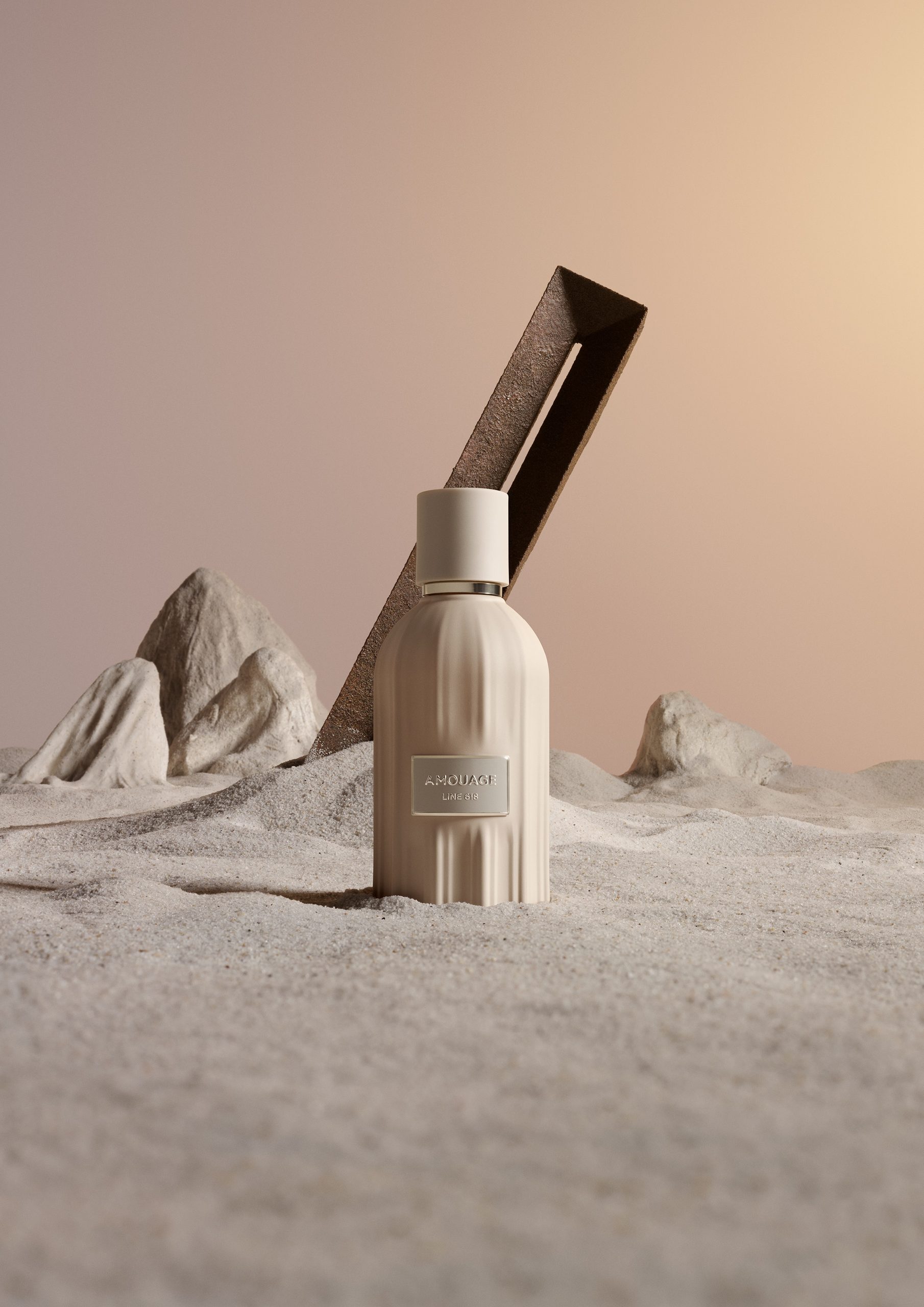
Prestige retail tests a brand’s credibility in a different way. Moonglaze, the first Saudi-born brand at Selfridges, is now also sold at Sephora Middle East, which shows that a Gulf launch and a Western shelf can coexist. In its GCC in Focus report for 2026, BeautyMatter reported that Amouage recorded $360 million in the first half of 2026, up 74%, a figure summarised by Perfumer & Flavorist. That growth came from a house that spent years building a recognisable identity before pushing volume.
Who owns the doors matters too
One of the more surprising facts in this story concerns ownership. The Qatar Investment Authority acquired Harrods in 2010, and the Saudi Public Investment Fund is a substantial shareholder in Selfridges, including De Bijenkorf and the Brown Thomas and Arnott group in Ireland. A March 2026 paper on luxury perfume from a Gulf perspective, which cites the Financial Times, describes Gulf investors as among the most important owners of leading retail brands, and argues that Gulf consumers are increasingly choosing local emerging brands over established European names such as Dior and Chanel. Read the full paper in the original PDF.
Capital ownership does not guarantee a shelf. A buyer in London still asks whether the bottle sells and whether the story holds. What changes is the conversation. A Gulf house no longer has to convince a Western retailer that the region matters. It has to show that its brand deserves the space.
What a Gulf house must get right abroad
At home, a fragrance house does not have to explain oud. Abroad, it must explain why its oud is different, why the bottle looks the way it does and who the wearer is meant to be. A useful test is simple: can a buyer in London repeat the brand’s core idea after one sniff and one minute of reading? If not, the story is still too close to the home market.
Price the brand for each market
Many houses set prices from their home market and then discover that the same bottle feels inexpensive in a Western department store, or confusing next to European houses. Price should reflect the brand’s position in each market, including the retailer, the packaging and the service around the sale.
Give partners something to sell
Capital can open a door, but sell-through keeps it open. Retailers need staff who can talk about the scent, consumer content that explains the ingredients, and launch events that make the buyer feel the brand belongs on their shelf. Those details are rarely visible in a press release, and they usually decide the second order.
Where an agency earns its place
In our work with fragrance houses, the same questions come back every time. Can one positioning hold in Paris, Riyadh and New York at once? Does the packaging read on a shelf and on a phone screen? Is each launch built for its market rather than copied from the first one? An agency should not simply produce more campaigns. Its job is to protect what makes the house desirable while distribution grows. The approach we describe in our beauty and fragrance work follows the same logic, and our reading of the future of beauty in the GCC sets out the wider context.
Gulf fragrance does not need to invent a new story. It needs to decide which story it will export and who will carry it abroad. For houses making that decision now, the next six months will matter.
Sources
This article draws on Journal du Luxe’s analysis of The Perfumist ranking, the Perfumer & Flavorist summary of BeautyMatter’s GCC in Focus 2026 report, and a March 2026 Gulf perspective paper on luxury perfume that cites the Financial Times. The ownership figures on Harrods and Selfridges come from the same paper.